
The Spanish department is a really important part of our school because it goes beyond just learning a language. It gives students the ability to connect with people, understand different cultures, stay aware of what’s going on in the world, and feel more confident in who they are and how they express themselves.
There are Spanish classes for everyone depending on your level. Students can start with Spanish 1 or 2 in their freshman year, where you learn the basics like vocabulary and how to form sentences. Those in Spanish 1 continue to Spanish 2 in their sophomore year and students in Spanish 2 move on to Spanish 3 honors, where the material goes more in depth. By junior and senior year, students have the option to take AP Spanish, where you have real conversations, and learn how to communicate in real-life situations.
What really stands out about our Spanish classes is how much culture is included in the learning. It’s not just about grammar, students also learn about traditions, different Spanish- speaking countries, and real problems and issues that affect those communities. That makes the classroom for engaging and interesting.
Ms. G’s role also plays a big part in that environment. She’s created a space where students are encouraged to grow without the fear of being judged. She makes everyone feel included and supported, while helping students build confidence, connect to culture, and develop skills that actually matter outside of school. She’s supported us and created a safe place for everyone in the classroom. Ms.G brings energy to the classroom. We always start off our class focusing on a song, watching a performance of it or its music video and we go into depth by breaking down the meaning of the lyrics and its visuals. It’s a fun way to learn and it helps us understand both the language and the culture on a deeper level. She also incorporates group projects where we are able to learn effectively but also able to be entertained and engaged in.
Our Student associate Fatima G ‘27 sat down with our Spanish Department Chair Ms. Gonzalez to learn more about the Spanish Program and in particular her perspective .


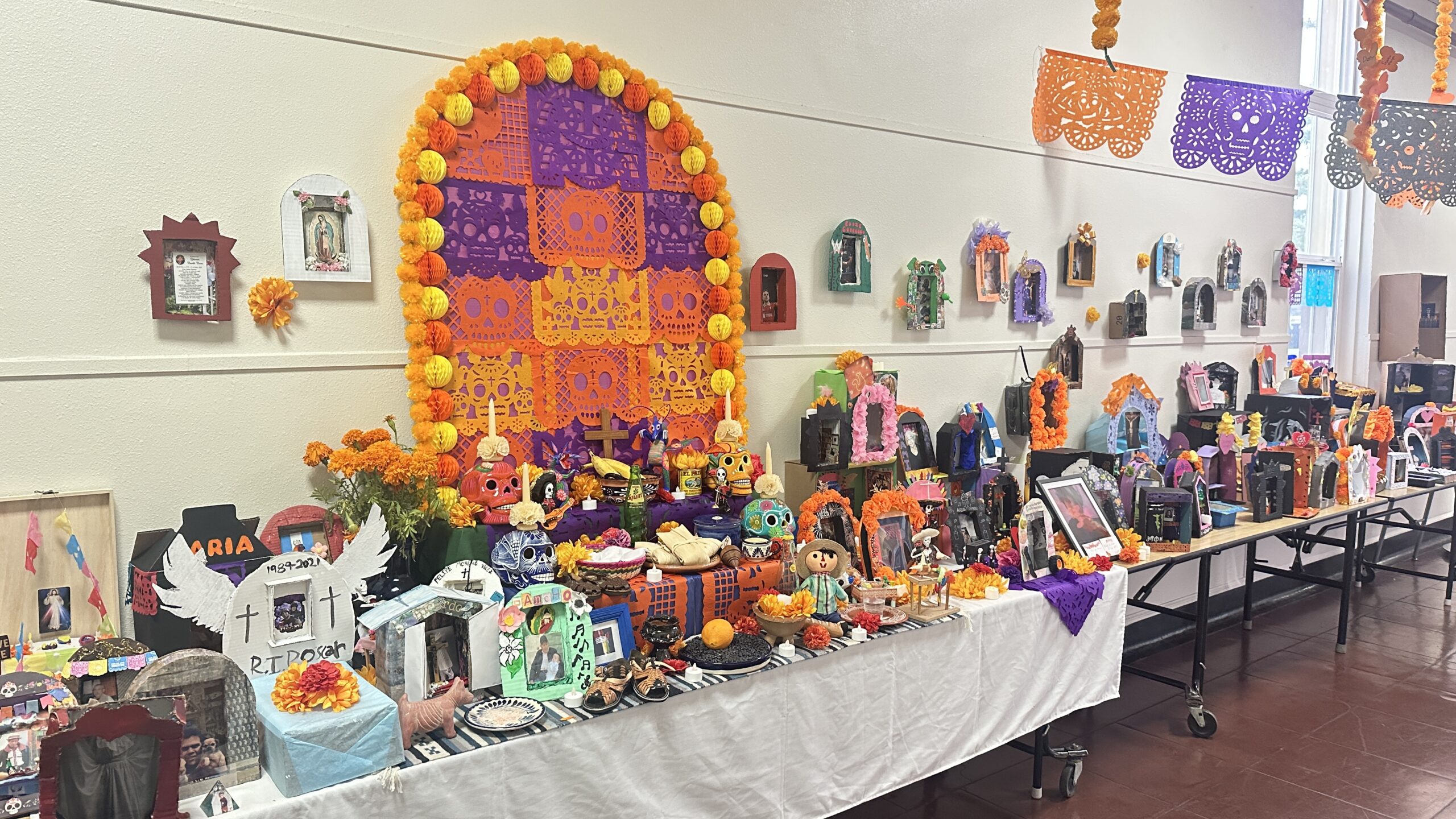
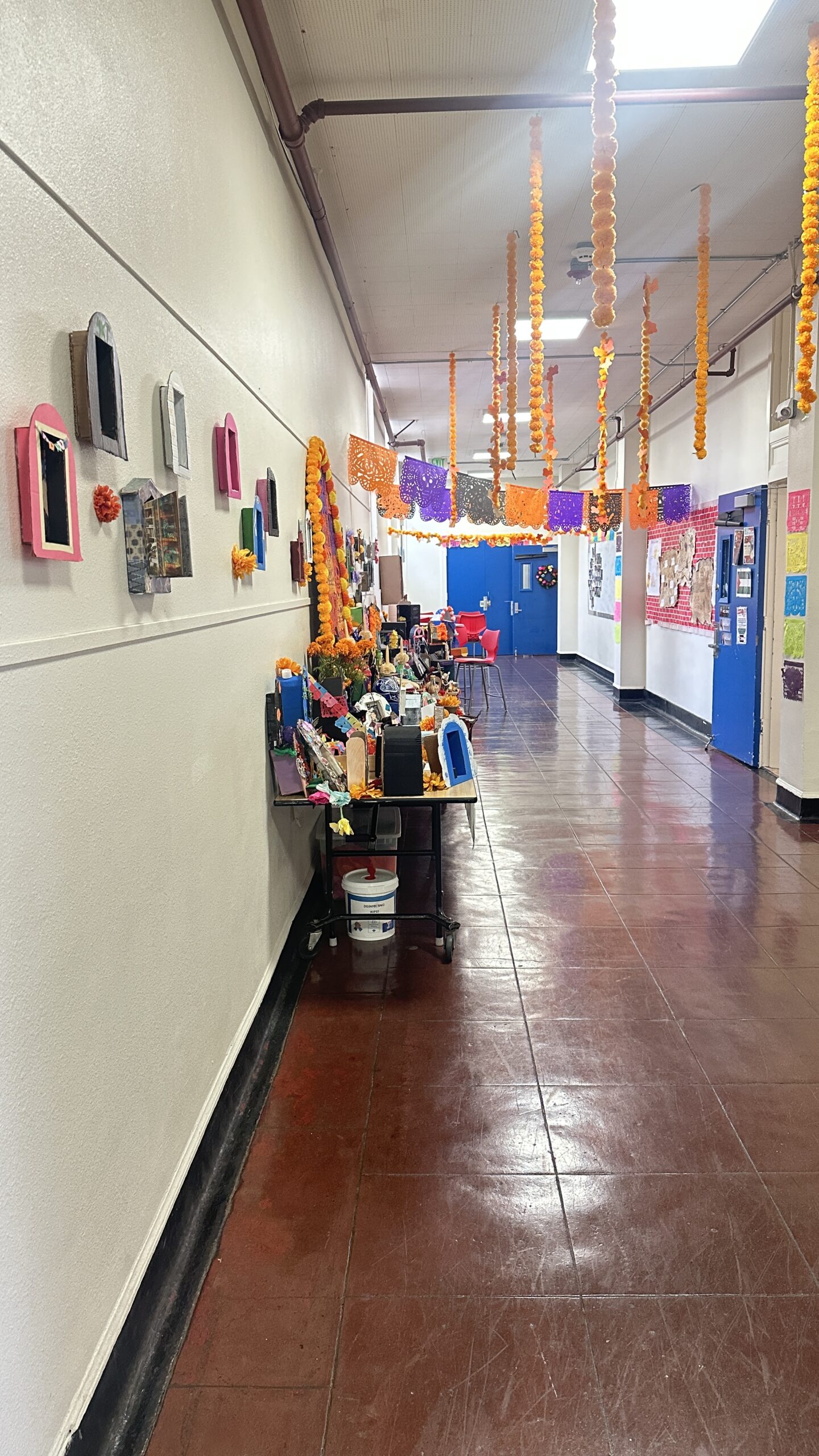
What inspired you to become a Spanish teacher and eventually lead the Spanish department?
I had a challenging experience acquiring language myself. I was a translator for my mother by the time I was three years old, so I had to show up in that role very early. That experience shaped me.
For me, “being bilingual is both a cargo and a regalo”—it is both a responsibility and a gift. Carrying that weight means living in two worlds at once.
When the opportunity came to become a Spanish teacher, I knew I wanted to do it differently. I wanted to change how Spanish was taught and how the department approached language learning. I also wanted students to understand the important nuances of language and not erase Latino identity by reducing it to stereotypes.
What are the mission and goals of the Spanish department?
We wanted to build something different—moving away from traditional “banking methods” of teaching. Instead, our focus is on how students actually use language: how they code-switch, how they engage with it, and how they acquire it in a more immersive way through music, reading, art, and culture.
The goal is to bridge the bilingual gap in a way that feels human. We want learning to be meaningful and fun, but also for students to recognize their own value as bilingual individuals.
What role does culture play in your curriculum and teaching approach?
Culture is everything. You cannot have language without culture—it is truly a language and culture class. Language is a way to analyze and experience the world, and culture is how we understand what that language represents.
It is also important for exploring Latino identity beyond ourselves. Without cultural understanding, people can become ignorant, even within their own communities. At times, there can even be internalized racism. Culture helps us expand our understanding of what the world looks like and who we are within it.
How do you support students who may feel nervous about learning a new language?
A big part of it is differentiation. If a student is nervous, I try to empathize first and then find solutions that allow them to learn in a lower-pressure way.
For example, if a student struggles with public speaking, I may allow them to practice or present in smaller settings, such as during lunch or in smaller groups. We also set clear acuerdos (agreements) in the classroom—while I cannot control every behavior, we commit to respect, and there is no space for bullying.
How do you encourage students to continue Spanish beyond the required years?
It’s about keeping students engaged in the culture—through music, films, and events. I often recommend songs, artists, or series in Spanish, and encourage students to watch shows or movies on their own.
Traveling to Spanish-speaking countries, staying curious, and continuing to practice with other cultures also helps students see that language learning is lifelong.
How do you incorporate speaking practice for students who are shy or unsure?
We use a mix of large group discussions and smaller partner conversations like “turn and talk.” I also intentionally pair more fluent speakers with those who are still developing confidence.
We use sentence starters and translation supports to reduce stress. Students are also welcome to come in during lunch for additional speaking practice if they want extra support.
What do you enjoy most about being a Spanish teacher?
I love being able to bring together my cultural identity and my teaching. It’s joyful work for me—we use music, videos, art, and storytelling, and it creates a space where everyone can participate in the fun.
It’s also about giving students the kind of space I wish I had as a kid—a place to engage deeply with culture and build community.
How do you build a sense of community in your classroom?
Community is built through shared agreements, respect, and collaboration. We focus on creating a space where students feel safe to take risks, make mistakes, and learn from each other. Over time, students begin to see themselves as part of a collective learning environment rather than just individuals in a classroom.
How do you measure success in a language classroom beyond grades?
Grades are a social construct—they matter in some ways to show effort, but they don’t fully define understanding, especially in language learning.
The real measure of success is how students use the language. Can they express themselves? Can they apply what they’ve learned in real-life situations? Can they engage in meaningful conversation?
We focus on projects, discussions, and authentic application rather than just tests. I also observe how students use Spanish beyond assignments—that’s where real learning shows.
What’s one moment in your career that made you especially proud of your students?
Some of the most powerful moments are the small ones—when students begin to talk about the systems around them and how those systems affect their lives, using the language tools they’ve learned.
For example, during discussions around events like the Super Bowl, students connected what they saw in media and performances to cultural concepts we studied, like apagones.
Hearing students not just recognize concepts, but actually use them to express their thoughts and experiences—that’s the most rewarding part.